 Today · World Post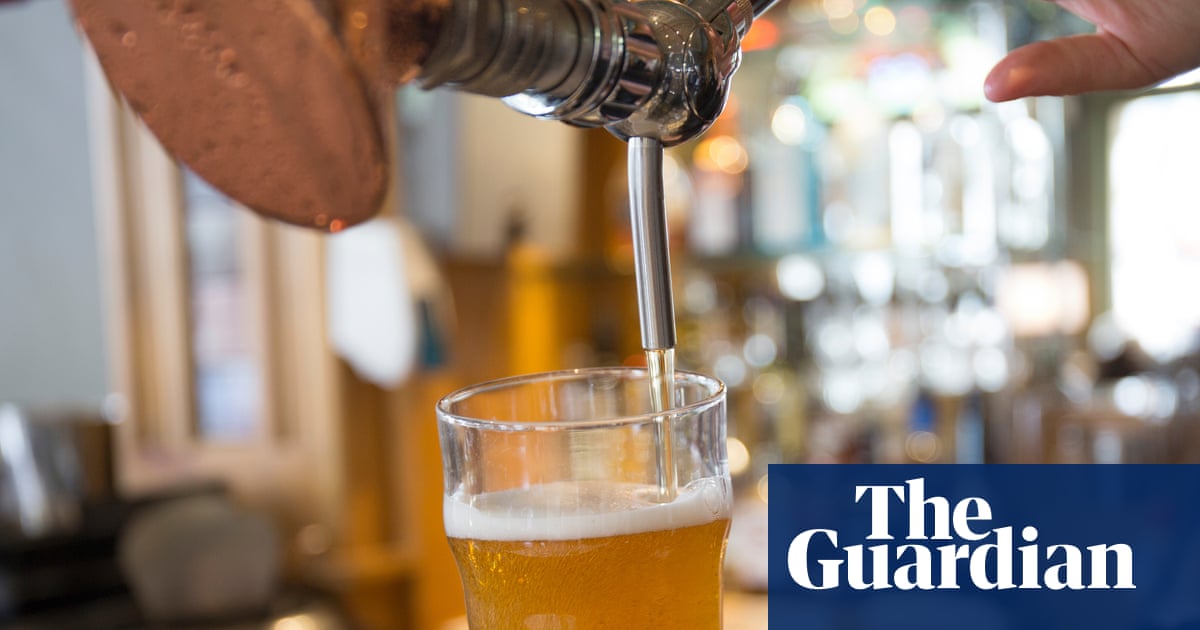
It’s no secret that Australians love getting on the beers : we consume 69m litres of the stuff every year. With that comes a significant packaging and environmental footprint, as commercially produced drinks generate emissions in both production and transportation. Australians drink and dispose of an estimated 17bn bottles and cans a year , fewer than half of which are recycled.
While an increasing share of bottles and cans are returned through container deposit schemes, drinks containers remain the third most littered items, according to Clean Up Australia. But many local breweries and drink companies in Australia are looking for ways to make alcoholic drink production more sustainable, with alternative brewing methods, renewable energy and reusable containers. As the weather warms up, calling for balmy outdoor evenings over drinks, what can you serve that is both delicious and better for the environment?
Renewable brews The vast majority of well-known beer brands in Australia – including those historically thought of as quintessentially true blue – are owned by overseas companies. Japanese conglomerate Asahi Group Holdings owns Carlton Draught, Victoria Bitter (VB), Great Northern, Balter and Mountain Goat, while Kirin Holdings owns XXXX, Tooheys, Hahn, James Boag, Little Creatures and Stone and Wood. Asahi purchases 100% renewable electricity across its Australian and overseas breweries and offices, and is aiming to reach net zero greenhouse gas emissions by 2040 , while Kirin has a 100% renewables target for electricity by 2040, and a net zero target by 2050 .
But some homegrown companies have made greater environmental inroads. Andrew Joseph, the senior brewer at Bodriggy in Melbourne, believes “sustainable brewing is the future of brewing in Australia”. Bodriggy Brewing Company was the second Australian and first Victorian brewery to be certified as carbon neutral through the federal government’s voluntary certification program, Climate Active .
It did so by purchasing carbon credits to offset emissions, which are contentious , but plans to cut its emissions by a further 30% by 2030. The brewery recently purchased its own grain silo to reduce the frequency of deliveries and worked with Pactec, a packing manufacturer, to design and create reusable lids on their kegs. Its upcoming goals include introducing e-water, a sustainable cleaning technology and shifting to an electric vehicle fleet.
Joseph hopes consumer demand will incentivise the industry to go further on sustainability. “If the consumers can push for a sustainable product and voice their opinions on sustainable practices, then I think that will inspire other breweries to become more green,” he says. Brewing innovation After packaging, a key contributor to beer’s environmental footprint comes from growing barley – which requires fertilisers and energy-intensive machinery – and malting grain, which can be water-intensive.
To tackle this issue, Adelaide University researchers have collaborated with Coopers Brewery to investigate whether certain cultivars of barley could make the malting process more efficient. Using barley strains that naturally dry quicker could mean less energy is required in the kilning stage of the malting process, which typically relies on gas as an energy source. Prof Matthew Tucker, the director of the Waite Research Institute at Adelaide University, says the rationale behind the research is: “The cheapest energy and the greenest energy is the one that you don’t need to use. skip past newsletter promotion after newsletter promotion “By improving the barley cultivars that go into making beer, we can reduce the energy and resources needed for production, making it more sustainable and economical,” he says.
In Sydney, meanwhile, researchers have been collaborating with Young Henrys, a Newtown craft brewery. The business installed 30kW of solar in 2016 with the help of community investors and purchases 100% renewable electricity to meet additional power needs. Young Henrys is now working with researchers at the University of Technology Sydney to design a small reactor for capturing carbon emissions from the beer fermentation process.
That carbon dioxide is pumped into bioreactors where algae is growing, which converts the gas into oxygen via photosynthesis. They then blend the algae, which is rich in protein, with a byproduct of beer brewing known as spent grain to create a nutritious livestock feed. The animal feed was trialled with 80 head of sheep, which appeared to enjoy eating it.
The sheep were then slaughtered, with the lamb cooked for a testing panel who believed the algae improved not only the flavour of the meat but the omega-3 content as well. Now in the fifth stage of the project, researchers are hoping to find a species of livestock that reduces methane emissions and benefits the animals’ health, productivity and quality of product. Richard Adamson, a director of Young Henrys, says: “If we can do methane reduction in both the brewing process and in the animal, whilst improving omega-3s at the same time, we’re really on to something that’s going to be quite viable”.
Refillable growlers and squealers Many breweries and pubs provide an option for customers to take tap beer home in a large bottle or vessel called a growler, a 1.89 litre flask that can be filled, and then washed and refilled with beer. Growlers typically hold about a six-pack’s worth of beer. There is also a 900ml option called a squealer for those looking for smaller amounts.
Directories like Beer Crawl enable people to search for local venues that provide growler refills.
Source: The Guardian